Published 20 January 2026
A mountain this striking was never going to be just a hill. Bathalegala has watched over the Kegalle valley for centuries, and it carries layers of colonial naming, military history and village folklore. Knowing the stories makes the climb far more meaningful.
Why “Bible Rock”?
The name Bible Rock is a colonial one. To British eyes, the mountain’s distinctive flat top and steep sides looked like a giant open book — a Bible resting open on a lectern. Some went further and imagined it as a Sri Lankan Mount Sinai, the biblical mountain of stone tablets. The English name stuck, but locally it has always been Bathalegala (බතලේගල).
The watchtower and the chain of fire
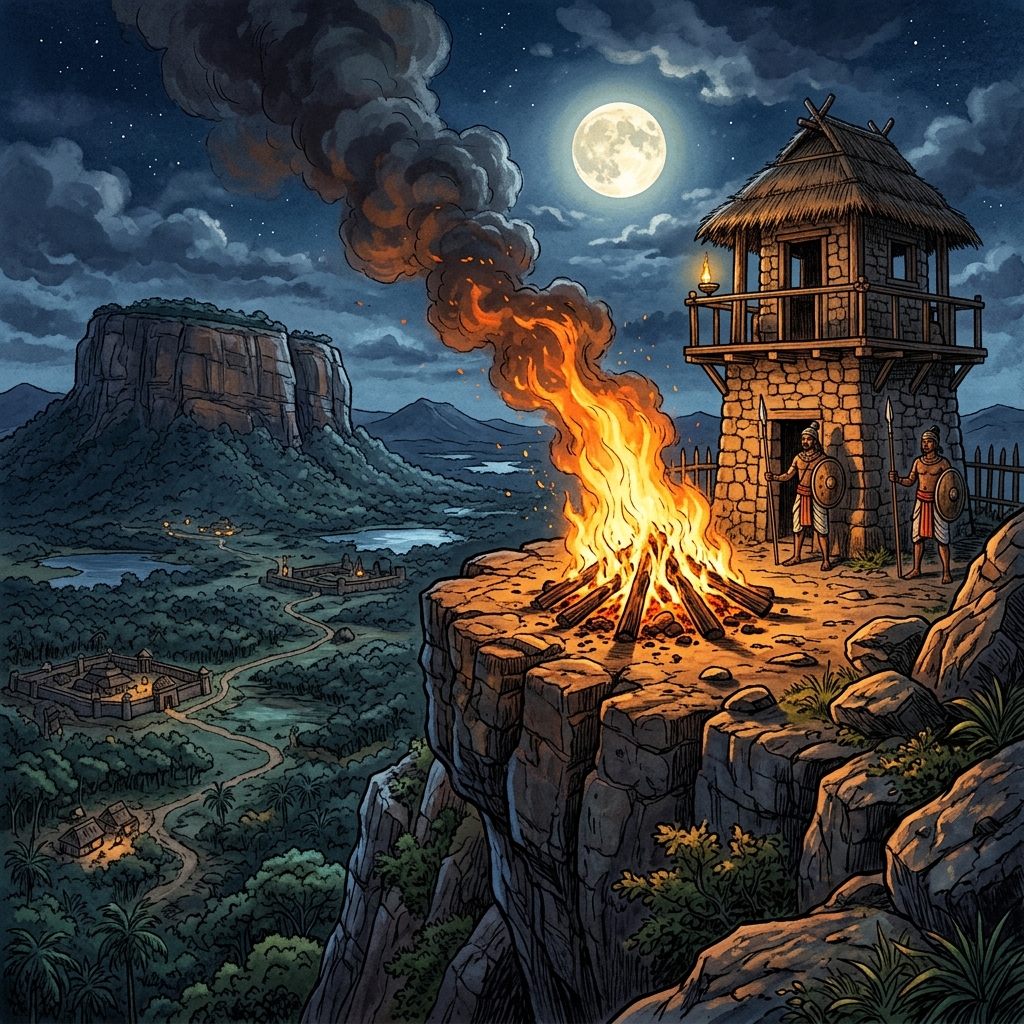
Long before tourists came for the view, that wide summit had a strategic purpose. During the era when the Kandyan Kingdom was under threat from the Portuguese — who controlled the low country in the 16th and early 17th centuries — Bathalegala served as a natural watchtower.
From the top, watchers could monitor the Kegalle valley and the vital Kadugannawa pass, the gateway into the Kandyan hill country. When danger approached, they didn’t send a runner — they lit a bonfire. That fire was the first link in a relay: the next mountain saw it and lit their own, and so the warning leapt peak to peak across the highlands, finally reaching Bahirawakanda, the hill overlooking Kandy itself.
It was, in effect, an early-warning network built of firelight and high ground — and Bathalegala was one of its key eyes.
The legend behind the name
Folklore offers its own explanation for the name “Bathalegala.” One enduring village story tells of a pot of rice that turned blood-red at this very spot — a strange and ominous event that became tied to the mountain’s identity. Like many Sri Lankan place-name legends, the details shift in the retelling, but the tale has travelled with the rock for generations.
King Walagambahu’s caves
Another legend reaches back further still. It’s said that the caves on the northern face of Bathalegala once sheltered King Walagambahu as he fled invaders. Caves across Sri Lanka are linked to this king’s years in hiding, and Bathalegala’s northern cliffs are part of that wider tapestry of refuge-and-return stories that locals still share.
Standing where history happened
What makes Bathalegala special is that you can stand on that flat summit today and see exactly why it mattered. The same commanding view that lets you pick out the Knuckles, Ambuluwawa and the Kadugannawa pass is the view those watchers used. The bonfires are long gone, the colonial mapmakers too — but the open book of stone remains, as unmistakable from the road as it ever was.
A good local guide can point out the watch directions and tell these stories on the spot, turning a quick climb into a walk through Sri Lankan history. Stay right where history happened at Bathle Eco Resort — reserve your stay direct at bathleecoresort.com.
Carry on with the complete Bible Rock guide, see what the hike is actually like, or book a guided Bathalegala tour that brings the history to life.